Teaching
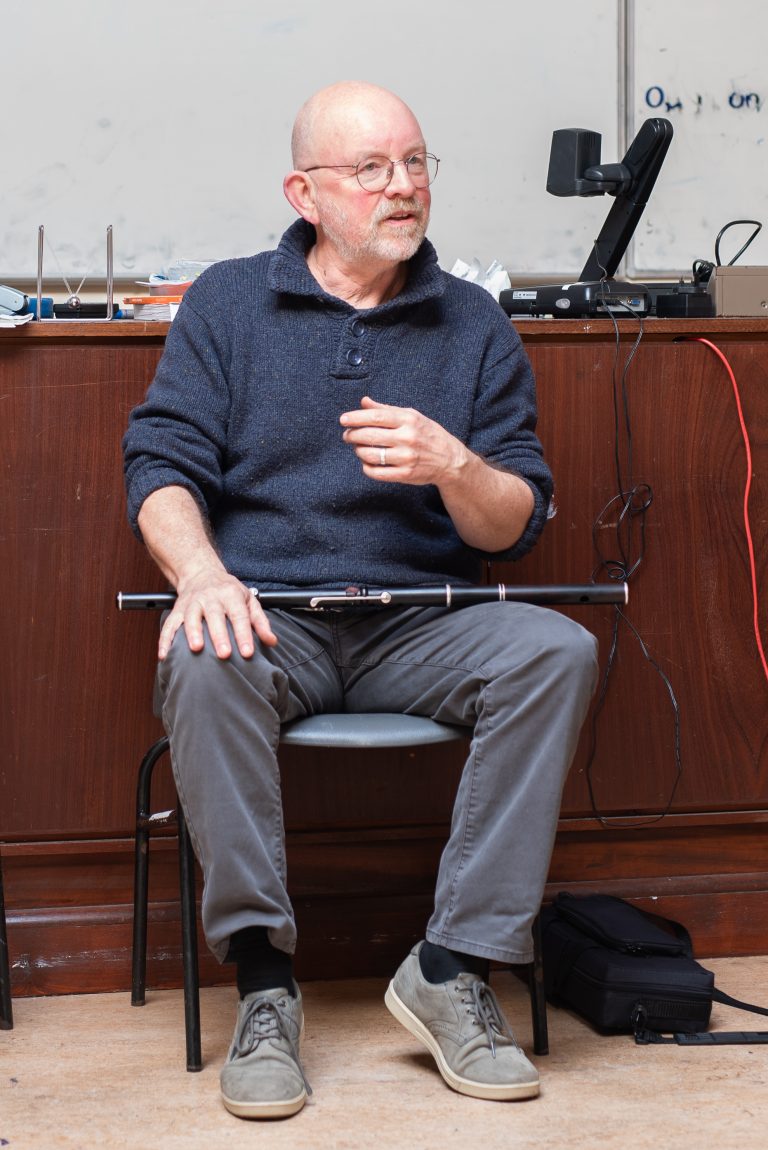
On my own pathway into traditional music teaching was almost unheard of, something that might surprise those involved in its almost universal occurrence today.
Prior to the revival, the idea of anyone, young or old, attending an accomplished musician to learn an instrument was extremely rare.
One of the better known examples is that of the great Kerry fiddler Padraig O’Keefe, who taught a large group of fiddlers in the early 20th C., and who even developed a tablature to help in his teaching. O’Keefe’s activities have been well documented and researched, for example by fiddle player Matt Crannitch.
In 1970s Belfast, and I can only speak to that and not other areas of the country, one learnt by the age old method of listening and imitating, and in those days that largely meant listening to live music, recordings being few and far between at that time.
Somehow, the inherent difficulties in that process, particularly in a society as divided and in conflict as Northern Ireland in that decade, intensified each small step on the path.
Fifty years later, teaching and all its concomitant activities has come to make up a large, if not the largest area of traditional music activity.
Like many of my contemporaries I became involved in teaching, and taught at many teaching festivals at home and abroad over the years.
Eventually I came to have my own take of what teaching involves, and what it can accomplish.
Some of this can be found in the relevant chapter of THE IRISH FLUTE PLAYER’S HANDBOOK.
Condensed, it comes out something like this…
You can be taught how to physically play an instrument, how the sound is produced, what to do with your hands and body.
You can be taught what sequence of notes makes up a tune, and how they’re rhythmically assembled.
You can acquire a repertoire of tunes, even compose some yourself.
Now you’re ready to learn music.